Industrial Spray Booths in WA: Getting Your Painting Right the First Time
Search results are full of people looking for an “inustrail spray booth” or “industrail spray painting” instead of the correct spelling. Spelling aside, the bigger problem is this: a lot of Western Australian workshops are trying to use equipment and paint systems that were never really built for our heat, dust and distance.
At McDougall Weldments in Cuballing, spray painting is not just a finishing touch. It protects gear that has to work hard in mines, on farms and in plants right across WA. This article walks through what actually matters when you pick or upgrade an industrial spray booth, and how we approach industrial spray painting so the coating lasts in local conditions.
Why Spray Booths in WA Fail So Quickly
A tidy new booth can look impressive on day one. Six months later, the story often changes, especially outside the metro area.
Common problems we see:
Filters clogging far faster than the manual suggests
Fans corroding in coastal or salty air
Uneven air flow pulling dust back onto fresh paint
Lighting that makes colour matching guesswork
Many of these issues come back to one thing: the booth was designed for mild, clean environments. Western Australia is anything but mild or clean when it comes to industrial work.
Think of places like Karratha, Port Hedland or Kalgoorlie. Fine dust ends up on every surface. In coastal areas around Perth and down the south coast, salt hangs in the air. Paint fumes, abrasive blasting grit, welding fumes and high temperatures all share the same shed. A standard setup that might be fine in a southern city on the east coast simply cannot cope here for long without serious adjustment.
What Really Matters in an Industrial Spray Booth
Sales brochures talk a lot about fan sizes and filters. Those details matter, but only in context. In a WA workshop, the priorities usually look like this.
Filtration that can handle dust and overspray
In many workshops, intake and exhaust filters clog far faster than the manufacturer suggests. A booth that sits near a blasting bay or a yard with red dirt will draw in contaminated air all day.
For this reason, we like staged filtration. A pre-filter catches the larger material before it gets to the main filter bank. The main filters then only deal with fine overspray and smaller particles. This approach:
Extends filter life
Keeps air flow steadier over time
Reduces the chance of overspray drifting back onto fresh work
It is also easier to plan maintenance when the system does not swing from clean to blocked in a matter of days.
Exhaust systems that resist rust
Exhaust fans and ducting sit in a harsh pocket: paint fumes inside, humid or salty air outside. In coastal WA, standard mild steel components can start to rust surprisingly quickly.
We have seen fans that needed replacement in less than two years where coatings and materials were not chosen with local conditions in mind. These days, we look closely at:
Coating systems on fan housings and ductwork
Material selection for blades and housings
Drainage points and access for cleaning
A small change upfront, such as coating internal surfaces with a suitable protective system, can save a substantial amount in the long run.
Lighting that suits industrial painting
Good lighting is more than brightness. Colour temperature and even coverage inside the booth make a big difference.
Poor lighting leads to:
Missed spots on complicated fabrications
Incorrect colour matches
Difficulty judging film build and gloss
We favour LED lighting with neutral daylight-style colour and high colour rendering, spaced so that shadowing around beams and large components is kept to a minimum. When you are painting grain handling gear, truck bodies or structural steel, being able to see clearly into corners and behind braces is critical.
When Your Work Does Not Fit Inside a Booth
Not everything can be wheeled through a set of doors. Large frames, silos, field bins, tanks and long structural items often live outside or in open sheds.
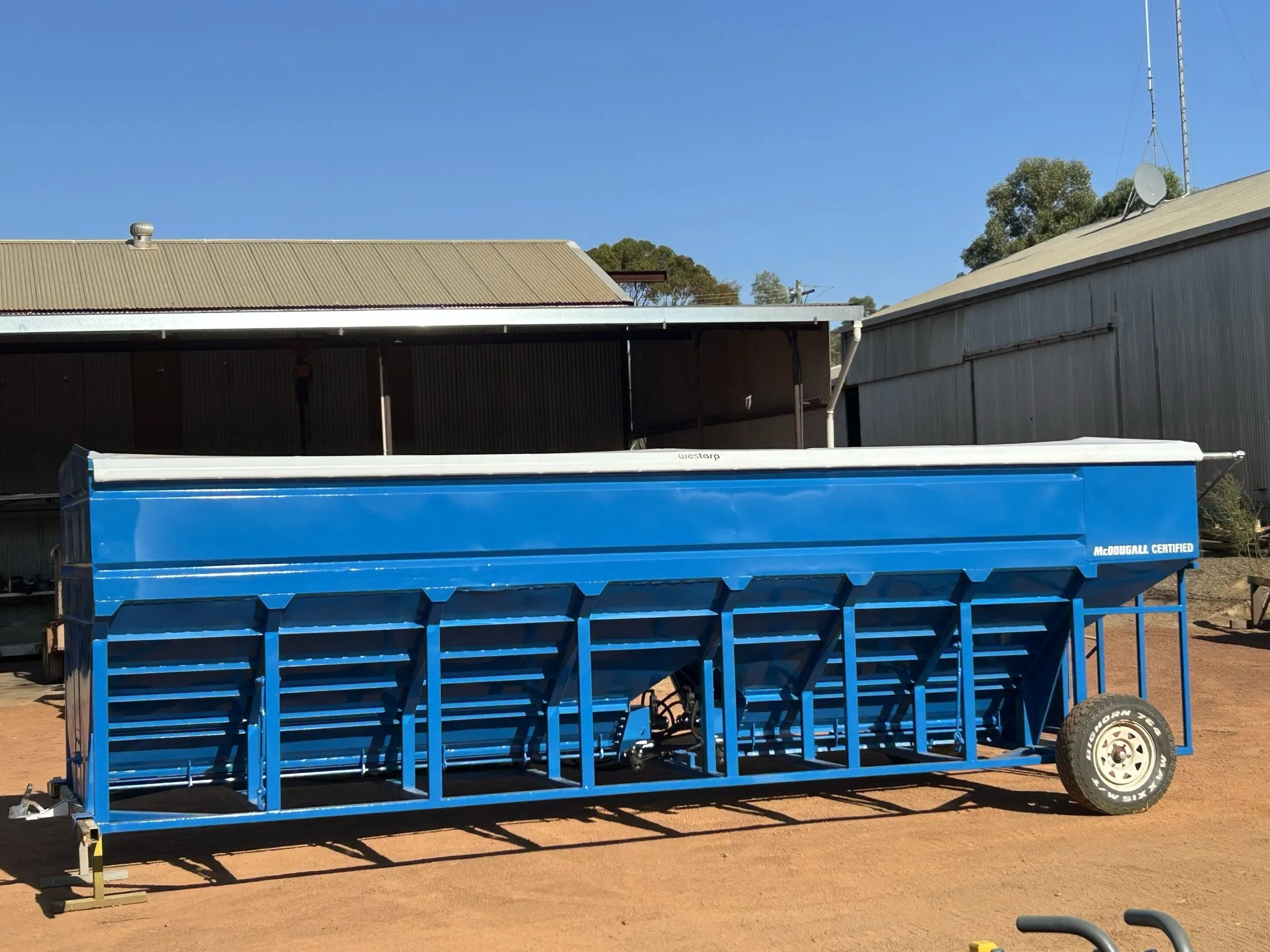
Some companies in WA, such as mobile blasting and painting outfits around Henderson and the Kwinana strip, focus on taking the gear to site. At McDougall Weldments, we do both: fixed industrial spray painting in our yard, and project-based painting out where the job sits.
For large or fixed items we often:
Build temporary enclosures around the work
Use extraction and filtration suited to the project size
Control dust and overspray with careful layout and timing
A good example is grain silos or sheep yard components that are bolted down. Moving them to a booth would cost far more than setting up around them. The goal is always the same: booth-quality finishes, even when the work never passes through a traditional booth door.
Surface Preparation – Where Good Industrial Painting Starts
A spray booth cannot fix poor preparation. If the surface is contaminated or poorly profiled, the paint will fail no matter how fancy the booth is.
At McDougall Weldments:
We use garnet stone for blasting, with low silica content to protect our crew and meet safety expectations
Steel is prepared to a high standard of cleanliness and profile so primers can key properly
We follow with a zinc-rich or cold-gal primer for heavy industrial work before applying two-pack systems
Shortcuts at this stage might save a few hours on a single job. In WA conditions, that choice usually comes back as rust, peeling or blistering within a short time.
Two-Pack Paint for WA Conditions
The term “two-pack” covers a wide range of coating systems. Some are designed for interiors, some for full sun, some for splash zones in marine areas.
We match the coating to:
Location (coastal, inland, desert, high rainfall)
Exposure (full sun, chemical exposure, constant wet areas)
Substrate (mild steel, galvanised steel, aluminium, existing coatings)
For example:
Equipment destined for Karratha or Newman spends years in strong sun and heat. That calls for systems that cope with high temperatures and UV. Plant and machinery near the coast or on wharves faces salt spray, so the focus is on corrosion protection and resistant topcoats.
Using one generic paint across all projects might sound simple. In WA, it usually means repeated repainting and more downtime over the life of the asset.
Running Costs and Maintenance That Often Get Ignored
The purchase price of an industrial spray booth is easy to see. Running costs are not.
Points many buyers only discover later:
Power use
Fans, heaters and lights draw a lot of current. A 10 metre booth can add tens of thousands of dollars a year to your power bill, especially if it runs multiple shifts. Variable speed drives and efficient lighting help, but only when specified properly at the start.Filter replacement
Filters need to be changed on a schedule that suits local dust and workload, not just the manual. A booth near abrasive blasting or farm work will clog far quicker than one in a clean panel shop.Breakdowns during busy periods
A fan failure in the middle of harvest or a shutdown can halt a whole line of work. Regular inspections and planned filter changes are far cheaper than emergency call-outs and idle staff.
Our own view is simple: plan for maintenance from day one. We keep a wide range of parts and filters on hand at Cuballing, so when a client calls from the Wheatbelt or Goldfields, the response is measured in hours and days, not weeks.
Repair or Replace – How We Look at Old Booths
Many workshops across WA still run booths that date back one or two decades. We see a lot of these when owners call asking if they should throw more money at repairs, or put that cash toward a modern setup.
Questions we ask:
How old is the booth?
What state are the fan, ducting and structure in?
Has the type of work changed since it was installed?
Are you struggling to meet current safety or environmental requirements?
If the structure is sound and problems are limited to fans, lighting or controls, repairs or upgrades can make sense. LED lighting, new filters, updated control panels and better extraction can extend life and improve results without full replacement.
On the other hand, when corrosion is deep in the structure or the booth layout no longer suits the size of current work, a new design often saves money over the next ten years, even if the initial price feels higher.
How McDougall Weldments Handles Industrial Spray Painting
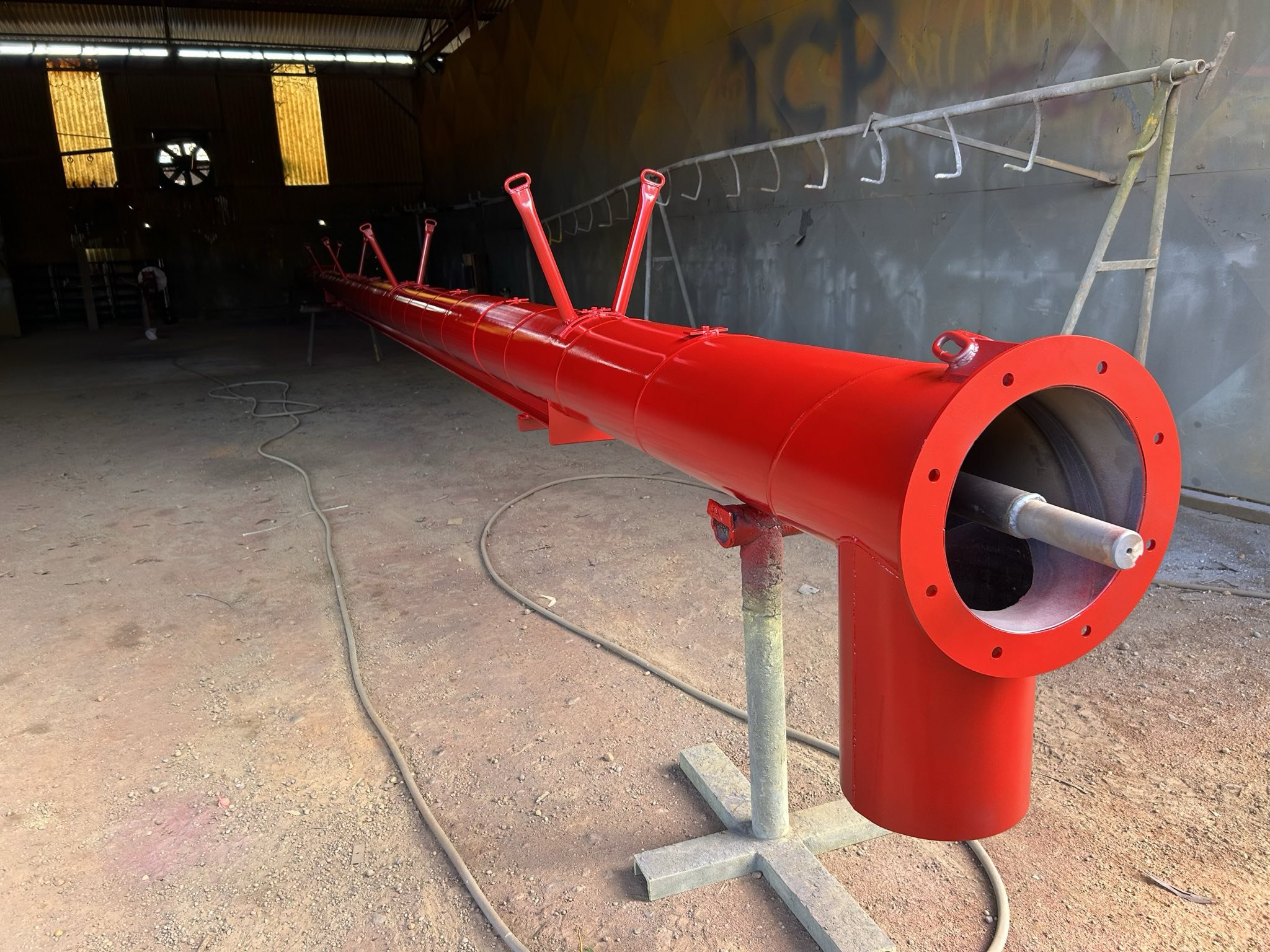
McDougall Weldments has been working with heavy agricultural and industrial equipment since 1968. The painting side of the business grew from practical needs: farmers and contractors wanted gear that did not rust out before its time.
Today, our industrial spray painting service covers:
Abrasive blasting with garnet stone
Industrial primers and two-pack systems
Work in our yard at 48 Austral Street, Cuballing
Project work for larger items across regional WA
What sets the work apart is not fancy jargon or shiny brochures. It is a mix of:
Long experience with farm and industrial machinery
Tradespeople who understand both welding and coating
Local knowledge of how WA weather and dust chew through equipment
When a client rings from a sheep station, a mine site or a grain operation, the question usually is not “What is your price per square metre?”. The real questions are:
How long will this coating last where we are?
Can we keep working while the painting is done?
Who do we call if something goes wrong in six months or a year?
Those are the questions we are set up to answer.
Choosing Industrial Spray Painting and Booth Support in WA
If you are searching for industrial spray booth, have typed inustrail spray booth by mistake, or are trying to sort out industrail spray painting for your own workshop, start with these points:
Think about your work type and location before you choose equipment
Look at filter access and replacement, not just fan size
Put money into good lighting and reliable extraction
Plan maintenance from day one rather than waiting for breakdowns
Work with people who understand WA conditions, not just generic specifications
McDougall Weldments has been serving the Australian agricultural and industrial community since 1968, and is now run by Benjamin Sleep and Chris Millin.
If you want to talk about spray booths, mobile industrial spray painting, or repainting existing equipment, visit us at 48 Austral Street, Cuballing WA 6311,
or phone 08 9883 6020 during our weekday hours. We are happy to look at your setup and give practical advice shaped by how gear actually lives and works in Western Australia.