
Sandblasting Costs in Cuballing: What You’ll Pay and Why
Sandblasting Costs in Cuballing: What You’ll Pay and Why
If you own a header, trailer, tank or old seed bin around Cuballing you want a clear idea of sandblasting costs in Cuballing before you call anyone. We wrote this local guide to explain what a typical sandblasting quote covers, which job details lift the price, and when blasting is the smarter repair compared with replacement.
We started from the workshop bench in Wagin and have worked with farmers and industrial operators across the region for decades. You’ll get plain answers here: what the process includes, what heavy-duty garnet does for steel life, and what details to have ready when you ask for a price. Read on and you’ll know how to compare quotes and what to expect from a trusted local team in Cuballing.
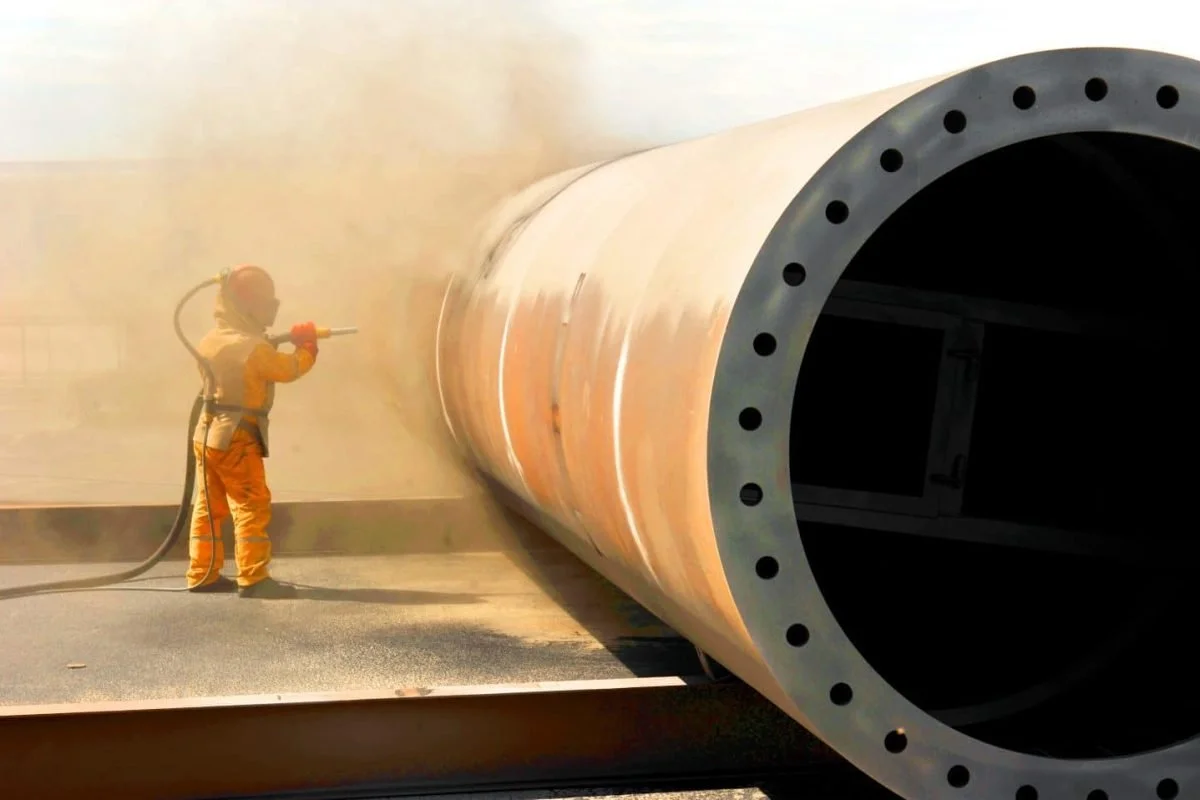
What Sandblasting Usually Includes
Most sandblasting jobs we see around Cuballing start the same way: you’ve got steel that’s tired, flaking, rust-stained, or layered with old paint, and you want it clean enough to weld, prime, and repaint properly. That’s what a standard sandblasting quote is built around.
1) Inspection and prep
Before any blasting happens, we’ll usually talk through what the item is and what it’s for (header parts, trailers, tanks, seed bins, chassis rails). Then comes the unglamorous work that affects sandblasting prices in Cuballing: scraping heavy build-up, removing loose scale, masking off bearings, threads, hydraulic rods, rubber, and any ID plates you want kept readable. Small parts might be racked or hung so we can hit every face evenly.
2) The blasting itself (media and finish)
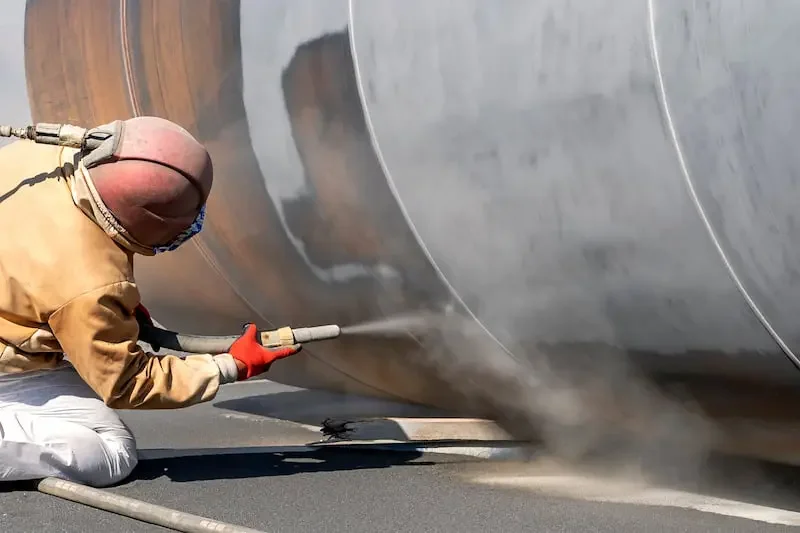
In our shop work we use low silica garnet stone for heavy-duty blasting on steel. Garnet cuts rust and old coatings without the same dust profile as high-silica media, and it leaves a surface that takes primer well when you’re heading into industrial painting. Different jobs need different aggression, so a quote should specify the target finish (for example, “strip to clean steel” versus “key existing paint for recoat”).
Fast. Loud. Effective.
3) Cleanup, disposal, and what’s in the quote
After blasting, expect blow-down, sweep-up, and handling of spent media and debris. A solid quote should also spell out:
- what’s included (prep, masking, blasting, cleanup)
- what’s excluded (repairs, welding, coating, transport)
- the condition assumptions (oil, grease, thick bitumen, or fertiliser corrosion changes the work)
If you’re comparing sandblasting costs in Cuballing, ask one question up front: what prep is allowed for, and what happens if the gear arrives dirtier than expected?
What Changes Sandblasting Cost in Cuballing
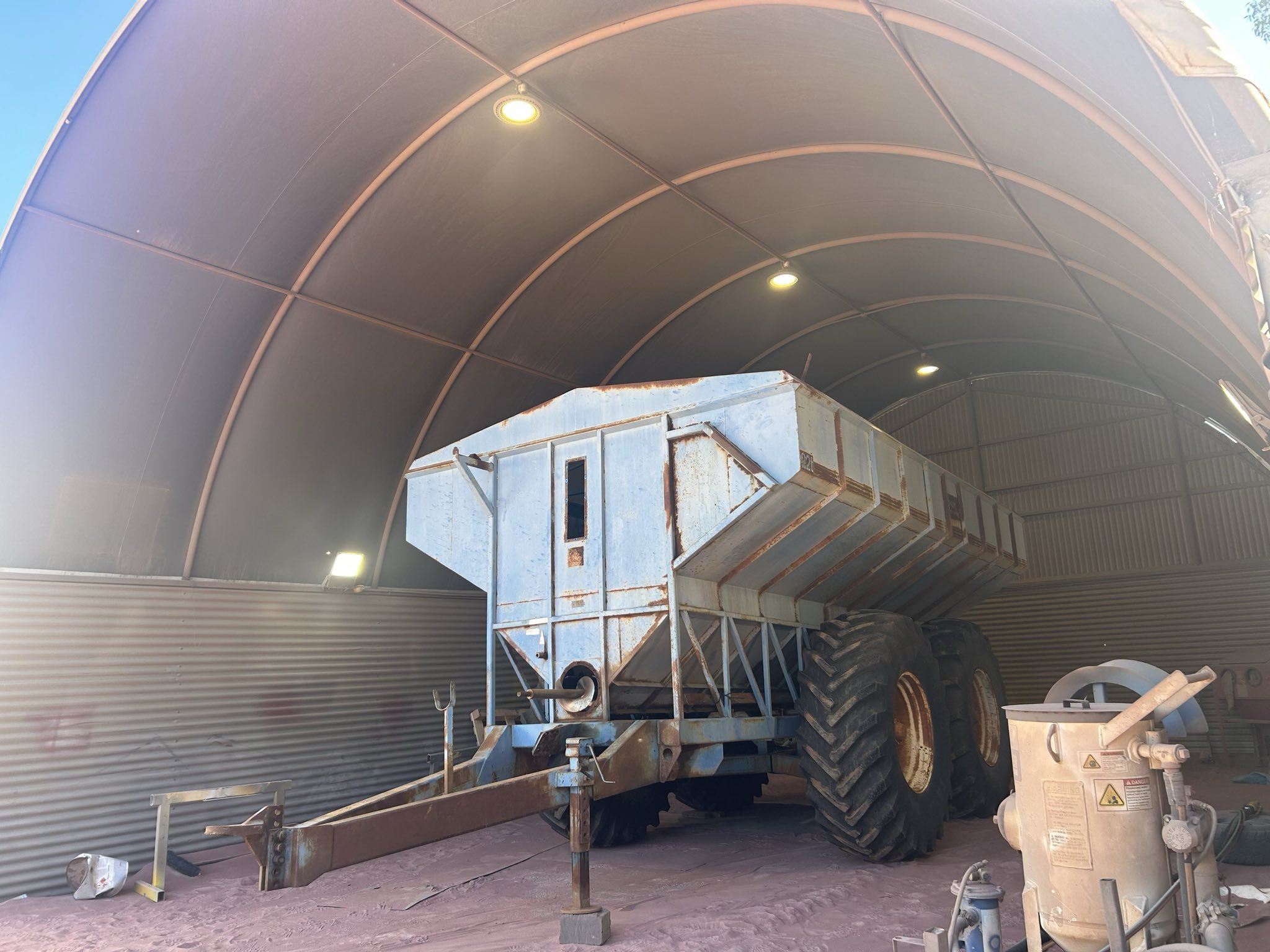
Sandblasting is priced on effort, not just “time on the trigger”. If you’re comparing sandblasting prices in Cuballing, these are the things that move a quote up or down, fast.
1) Size and shape of the job
A flat panel is straightforward. A chaser bin, seed bin, trailer chassis, or anything with ribs, corners, ladders, and gussets takes longer because we’ve got to work every edge and shadow line. More surface area means more media, more compressor time, and more cleanup.
2) Surface condition when it arrives
Clean steel blasts clean. Dirty steel doesn’t.
If the gear comes in with caked mud, oily residue, old fertiliser dust, or flaking scale, we spend more time on prep before blasting can even start, and that’s where costs creep in quietly.
3) What coating has to come off
Removing weathered farm enamel is one thing. Stripping multiple layers, heavy industrial coatings, or unknown paint systems is another. Some coatings load up media quickly, and some need a different approach so you don’t end up with uneven cut or a surface that won’t take primer later. Tell us what’s been painted on it if you know.
4) Access and masking
The fiddly bits matter: bearings, threads, hydraulic rods, rubber mounts, and data plates. Good masking takes time, and tight access around guards, hoppers, or folded frames slows the work because you can’t safely “blast and hope”.
5) On-site vs workshop blasting
If the job can come into the workshop, we control the setup, containment, and handling. On-site work (if applicable) adds travel, setup space requirements, and usually more time spent managing overspray and cleanup around other equipment. That’s why sandblasting quotes in Cuballing often start with one question: can it be transported from Cuballing, or is it fixed in place somewhere between Narrogin, Wagin, Wickepin, or Pingelly?
Why Heavy-Duty Blasting Suits Farm and Industrial Gear
Old paint and light surface rust are one thing. Worn farm and industrial steel is another. If you’re talking machinery frames, shear points on trailers, tank saddles, loader arms, seed bin skirts, or anything that’s lived through fertiliser dust and wet seasons, heavy-duty blasting is usually the only way to get back to a base you can trust.
Steel that’s “tired” needs a harder reset
On gear that’s been working around Cuballing and out toward Narrogin, Wagin, Wickepin, and Pingelly, we often see the same pattern: the coating looks patchy, but the real issue is what’s underneath. Pitted rust, scale that’s lifted in layers, and edges that have worn thin from vibration or abrasion. If you paint over that, it doesn’t fail politely. It lifts at the worst seam first.
Heavy-duty blasting with a cutting media profile gets into the pits and around weld toes so primer has something clean to bite to. That surface prep is the difference between a repaint that lasts a season and one that holds up in the paddock.
Why the tougher jobs cost more
If you’re comparing the cost of sandblasting in Cuballing, know what makes a job “heavy”:
- Thick scale and deep pitting take more passes and more media
- Complex frames, cross members, and gussets slow nozzle access
- Tanks and enclosed sections can need extra handling and safety controls
- Edges and thin spots require a careful touch to avoid distortion
That extra time is what moves sandblasting prices in Cuballing. But it’s not wasted time. Done properly, the coating system lasts longer, because we’ve removed the failure points instead of hiding them.
Ask your blaster what steel condition they’re allowing for, and whether the quote changes if the job shows up more corroded than expected. It’s a small question that saves arguments later.
When Sandblasting Pays Off for Refurbishment and Restoration
Rust is expensive. Steel usually isn’t.
If you’re weighing up sandblasting costs in Cuballing against buying new, the tipping point is often simpler than people think: if the frame is sound and the damage is mainly surface corrosion, failed paint, or old product build-up, blasting and recoating can put years back into gear for a fraction of replacement money.
Where blasting saves you real dollars
1) You keep the good metal. A lot of farm and light industrial gear looks “done” because the coating has failed, not because the structure has. Strip it back, treat what needs welding, and you’re building on a solid base.
2) You avoid the knock-on costs of replacement. New equipment can mean freight, lead times, fit-up changes, hydraulic tweaks, new wiring looms, and downtime you didn’t budget for. Refurbishment is usually more predictable because we’re working with what’s already on site.
3) You get proper coating adhesion. Blasting creates the surface profile that primer and topcoat need. Paint over chalky old enamel or rust bloom and you’ll pay twice.
Common refurbishment jobs we see around Cuballing
- Seed bins and older field bins with flaking coatings and rusty seams
- Chaser bins and augers where abrasion has worn the paint off high-contact areas
- Fertiliser spreaders with corrosion from product dust sitting in corners and under guards
- Industrial frames, brackets, and guards that have been repainted a few times and now chip easily
- Transportable yard components and fabricated parts that need to match existing gear after repairs
Quick check: tap and probe suspect areas. If you’ve got deep pitting, thin edges, or pinholes, budget for steel repairs alongside blasting. The best money is spent when blasting is paired with targeted fabrication, then sealed with a proper primer system so you’re not chasing the same rust again next season.
Why Local Experience Since 1968 Matters
Around Cuballing, blasting jobs rarely arrive “clean.” They arrive after a season in dust, fertiliser residue, rain, and paddock knocks. Some have been brush-painted three times. Some have had a quick patch weld that cracked again. That history changes the prep time, the masking, the handling, and ultimately the cost.
McDougall Weldments was founded by Gordon McDougall, who started the business in 1968 after working on the family farm at Wagin, WA. That background matters because farm and industrial gear doesn’t live in a showroom. It lives where breakdowns happen at the worst possible time, and where you need someone who can look at a job and call the hidden headaches early.
What long-running local work teaches you
When we talk about sandblasting costs in Cuballing, experience mainly shows up in the parts of the quote you don’t see:
- Access and handling: Awkward frames, bins, guards, and odd-lift items take planning, not guesswork. One wrong lift point can turn a simple blast into a repair job.
- Contamination awareness: Fertiliser dust, oily build-up, and old coatings can foul blasting and painting if they’re not dealt with in the right order.
- Rural time pressure: We understand downtime. If a piece of equipment needs blasting as part of a refurbishment, you want it sequenced sensibly with welding, fabrication, and coating so you’re not paying for double handling.
- Industrial expectations: Industrial clients care about consistency, repeatability, and documentation. Farmers care about durability and fast return to service. We’re used to both.
Ask this before you accept sandblasting quotes in Cuballing: what condition is the quote based on, what’s excluded (like repairs or extra cleaning), and how changes get approved if the job turns out rougher than expected. Simple questions. Costly surprises avoided.
Request a Sandblasting Quote from McDougall Weldments
If you want a number you can plan around, the fastest path is a quote based on your actual item, not a guess. Around Cuballing, two jobs that “look similar” can price out very differently once we factor in access, masking, contamination (fertiliser dust is a classic), and whether repairs need to happen before paint goes on. A clear scope keeps sandblasting quotes in Cuballing tight and comparable.
What we look for when we price your job
We’ll ask a few practical questions up front, because they affect labour, media use, and how the finish holds up once it’s back in the paddock or plant:
- What is it, and what’s it made from? (steel frame, bin, auger tube, guards, structural components)
- What coating is on it now: paint, galvanising, powder coat, unknown layers?
- How much build-up is there: grease, product residue, flaking paint, rust scale?
- What finish do you need after blasting (blast only, or blasting plus primer and topcoat)?
- How will it be handled: loose parts, awkward assemblies, or something that needs careful lifting points?
Small detail. Big difference.
Because we’re set up for heavy-duty work, we can also coordinate blasting with fabrication and refurbishment when it makes sense, then prime with a system designed for adhesion (we use low silica garnet and can apply cold-gal primer with Two Pack Paint where specified). That joined-up approach is often what makes sandblasting costs in Cuballing come out better over the life of the equipment, especially on chaser bins, seed bins, augers, and fertiliser spreaders that see constant abrasion.
We service Cuballing and the surrounding districts including Narrogin, Wagin, Wickepin, and Pingelly, and we’ve been family owned since 1968, so we understand the time pressure when gear is holding up a job.
Contact [McDougall Weldments sandblasting services](/) for a quote, and include: photos, overall dimensions, location (Cuballing area), current coating condition, whether you want blast-only or blast plus paint, any priority dates, and anything we should know about contamination or repairs for a faster estimate.
Frequently asked questions
How are sandblasting costs in Cuballing usually calculated?
We break a quote into a few clear parts: labour (preparation, masking, blasting, cleanup), media and consumables, surface preparation or repairs, and any protective coatings you want afterwards. The big cost drivers are item size, how much rust or old paint must come off, and access. For a quick number range we need to see photos or measurements, please fill in our typical price band here: [pricing].
Do you have a minimum charge or callout fee for jobs in Cuballing?
Small repairs and on-site visits sometimes carry a minimum job fee or travel charge so the job covers labour and transport. Our current minimums are not listed here; please confirm the exact figure with us when you get a quote: [pricing]. We’ll tell you up front whether the job meets the minimum or if a workshop drop-off is a better value.
Can you sandblast on-site at farms around Cuballing?
We offer workshop blasting for most jobs because it gives consistent containment and finish quality, but we can do mobile or on-site blasting for large or immovable equipment where practical. Our mobile service availability varies by job and distance. Confirm our current on-site service option here: [service-format]. If you need us on farm, send photos and location details for a realistic quote.
How long will a sandblasting quote take for a Cuballing job?
Turnaround depends on how much information you send. If you provide clear photos, dimensions and a short description we typically respond within a few working days. If you prefer an on-site inspection we’ll schedule that as soon as we can. For our usual response time to Cuballing enquiries, please confirm: [timeline]. We aim to give a clear, itemised estimate so there are no surprises.
What does a sandblasting quote usually include for Cuballing equipment?
A typical quote lists the work we’ll do: surface preparation, the blasting media (we use low silica garnet stone for heavy-duty jobs), containment and cleanup, and the protective coating options afterwards. We commonly recommend a cold-gal primer followed by Two Pack Paint for long life on farm gear. Ask about any warranty or workmanship guarantee we offer: [warranty].
Why choose McDougall Weldments for sandblasting around Cuballing?
We’re family owned since 1968, founded by Gordon McDougall after years on the family farm at Wagin, so we know farm gear and the sorts of repairs that last. We handle awkward, heavy jobs, use low silica garnet for deep cleaning, and offer cold-gal primer plus Two Pack finishes where needed. Send photos and job details and we’ll give a frank, practical quote tailored to Cuballing conditions.
Free local sandblasting quote for Cuballing
Contact McDougall Weldments for a quote and talk with our local team about your sandblasting needs in Cuballing. Tell us what you need sandblasted, the approximate size, whether the item can come to our workshop, and any coating you want removed or left. We’ll review the details, flag anything that adds cost, and explain our recommended finish (we use low silica garnet and cold-gal primer with Two Pack Paint where appropriate). We’ve been family owned since 1968; that experience means we can handle big, awkward jobs and give a practical, reliable price.
